

To truly understand the path of the healer, one must look beyond the physical objects and into the spirit of the craft. Writing as a practitioner, I want to walk you through the world of shamanic tools, not as a dry academic list, but as a living relationship between you, the Earth, and the unseen realms. Whether you are looking for shamanic tools for everyday success or preparing for a deep soul retrieval, the way you engage with these objects defines your practice.
What Are Shamanic Tools and Why Do They Matter?
When people first ask, "what are shamanic tools?", they often expect a definition of physical items. But the shamanic tools meaning is far deeper. These are "bridges." Our human minds are naturally tethered to the 3D world—bills, schedules, and social noise. Sacred shamanic tools act as a focal point, a way to signal to your subconscious and the spirit world that you are stepping out of ordinary time and into a sacred space.
In many traditions, indigenous shamanic tools are considered "living beings." They aren't just "used"; they are partnered with. If you are looking for a shamanic tools list to start your altar, remember that each item carries a specific frequency designed to shift your internal state. This is why traditional tools of shamans have remained largely unchanged for thousands of years; they resonate with the fundamental vibrations of nature.
The Essential Shamanic Tools List: Your Primary Allies
Every practitioner has their own unique set of shamanic healing tools, but there are several "heavy hitters" that appear across almost all cultures. If you are following a beginner guide to shamanic tools, these are the ones you will likely encounter first.
1. The Shamanic Drum: The Heartbeat of the Journey
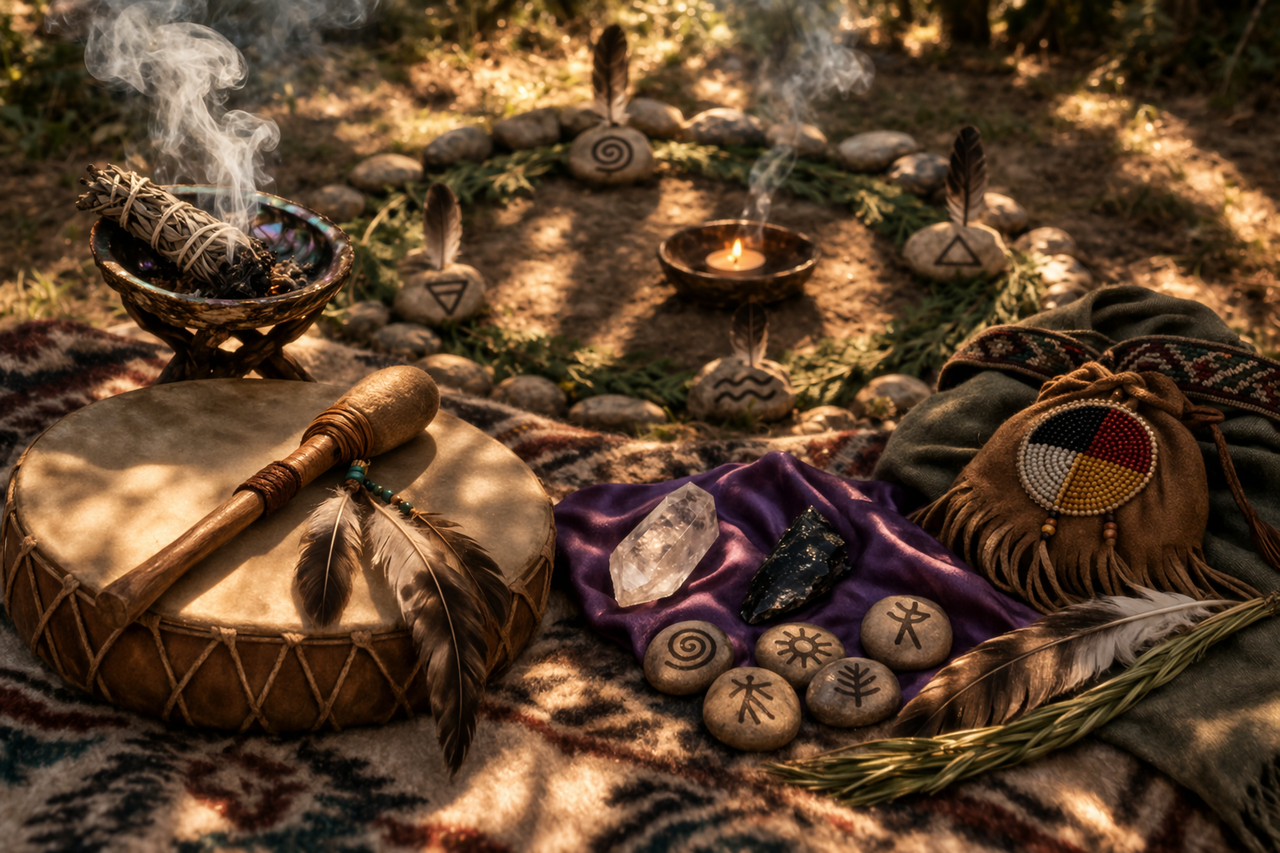
The shamanic drum meaning is often described as "the horse" because the rhythm carries the shaman into the spirit realms. It is the most powerful of all shamanic spiritual instruments.
- How to use a shamanic drum: It isn't about being a drummer in a band. To use it for tools for shamanic journeying, you need a steady, monotonous beat—usually 4 to 7 beats per second. This rhythm triggers theta brain waves, which are essential for entering a trance state. Hold the drum close to your chest so the vibration rattles your ribcage; this helps your soul "detach" from the physical body to travel.
2. The Shamanic Rattle: The Spirit of the Rain
While the drum is deep and grounding, the shamanic rattle meaning is tied to the element of air. The rattle is used to break up stagnant energy, much like a sudden rainstorm clears the air after a humid day.
- How to use a shamanic rattle: You can use it to "scan" a person’s energy field. By shaking it around the body, you can hear where the energy is stuck. If the sound becomes flat or dull, stay in that area until the rattle sounds crisp again. This is one of the most effective shamanic tools for healing and clearing "hucha" (heavy energy) from the aura.
3. Smudging Tools and Sacred Smoke
No shamanic ritual tools and supplies list is complete without clearing agents like Palo Santo, White Sage, or Copal. These spiritual tools used by shamans are the first line of defense in any ceremony. They clear the "static" of the mundane world so the spirits can hear your prayers clearly.
How to Choose Shamanic Tools That Actually Work for You
If you are browsing shamanic tools online, it’s easy to get overwhelmed. Here is the secret on how to choose shamanic tools: don't choose with your eyes; choose with your "gut."
- The Pull: Sometimes a shamanic tool will seem to vibrate or glow in your peripheral vision. That is the spirit of the tool calling to you.
- Origin Matters: Seek out traditional shamanic tools made from natural materials—hide, wood, bone, and stone. Synthetic materials often lack the "life force" needed for deep work.
- Making Your Own: For many, the best path is learning how to make shamanic tools. When you find a branch in the woods and turn it into a wand, or fill a dried gourd with pebbles to make a rattle, you are infusing your own DNA into the object. These become the most potent ancient shamanic tools in your kit.
Shamanic Ritual Tools and Their Role in Ceremony
Understanding what tools do shamans use in rituals is only half the battle; you must also know the "etiquette" of the spirit world. Shamanic ceremonial tools are handled with extreme care. They are often kept wrapped in silk or natural cloth when not in use to keep their energy "sovereign."
How to Perform Shamanic Rituals correctly:
- Opening: Use a rattle or smoke to call in the four directions. This creates a "sacred hoop," a protective boundary where you are safe from outside influences.
- The Work: This is where you bring in your shamanic ritual tools. If you are seeking guidance, you might use shamanic divination tools—like throwing stones or reading leaves. If you are doing energy work, you might use an extraction crystal.
- Closing: Never just walk away when you are done. Thank the spirits and your sacred objects in shamanism. Using a shamanic tool without gratitude is a quick way to lose your connection to it.
Shamanic Healing Practices: Using Tools for Deep Work
In shamanic healing practices, tools act as surgical instruments for the energetic body. For example, a "Khuya" (a sacred stone from the Andean tradition) can be used to pull out heavy energy from a client's solar plexus. These shamanic healing tools aren't doing the work for you; they are amplifying your intent.
How to work with shamanic tools effectively requires a state of "hollow bone." You must be empty of ego so the spirit of the tool can work through you. This is especially true for spiritual tools for shamanic practice that involve sound, like bells or flutes, which can recalibrate a person’s entire nervous system through frequency alone.
A Beginner Guide to Shamanic Tools for Everyday Life
You don't need to be in a cave in the Amazon to use shamanic tools for beginners. You can bring shamanic tool energy into your daily routine to stay grounded.
- Morning Intention: Hold a small sacred shamanic tool (like a favorite stone) while you set your goal for the day. It acts as a physical anchor for your willpower.
- Clearing Your Space: If your office feels "heavy" after a tough meeting, use a small hand-rattle to break up the tension.
- Protection: Carrying a small piece of Black Tourmaline or a "protection pouch" is a classic way to use spiritual shamanic tools to keep your energy field intact in crowded cities.
Learning How to Start Shamanic Practice
If you are wondering how to start shamanic practice, start small. You don't need the entire shamanic tools list on day one. Pick one shamanic tool—perhaps a rattle—and spend a month getting to know it. Shake it every day. Listen to the nuances in its sound. Ask it to teach you.
The shamanic tools meaning is ultimately found in the relationship you build. Over time, your list of shamanic tools will grow as your skills grow. You might find yourself drawn to shamanic divination tools or more complex shamanic spiritual instruments.
Whether you find your shamanic tools online or craft them by hand, treat them as the sacred shamanic tools they are. They are your allies, your protectors, and your voice in the silence of the spirit world. By learning how shamans use tools in rituals and applying that respect to your own life, you open a door to a much larger, more vibrant reality.


