
When you first encounter Amazonian rapé, it’s vital to understand what it truly is—and what it isn't. This isn't a recreational substance; it's a sacred shamanic powder with a history stretching back thousands of years. At its core, rapé is a tool for grounding, cleansing your energetic field, and finding profound mental clarity.
What Defines Authentic Amazonian Rapé
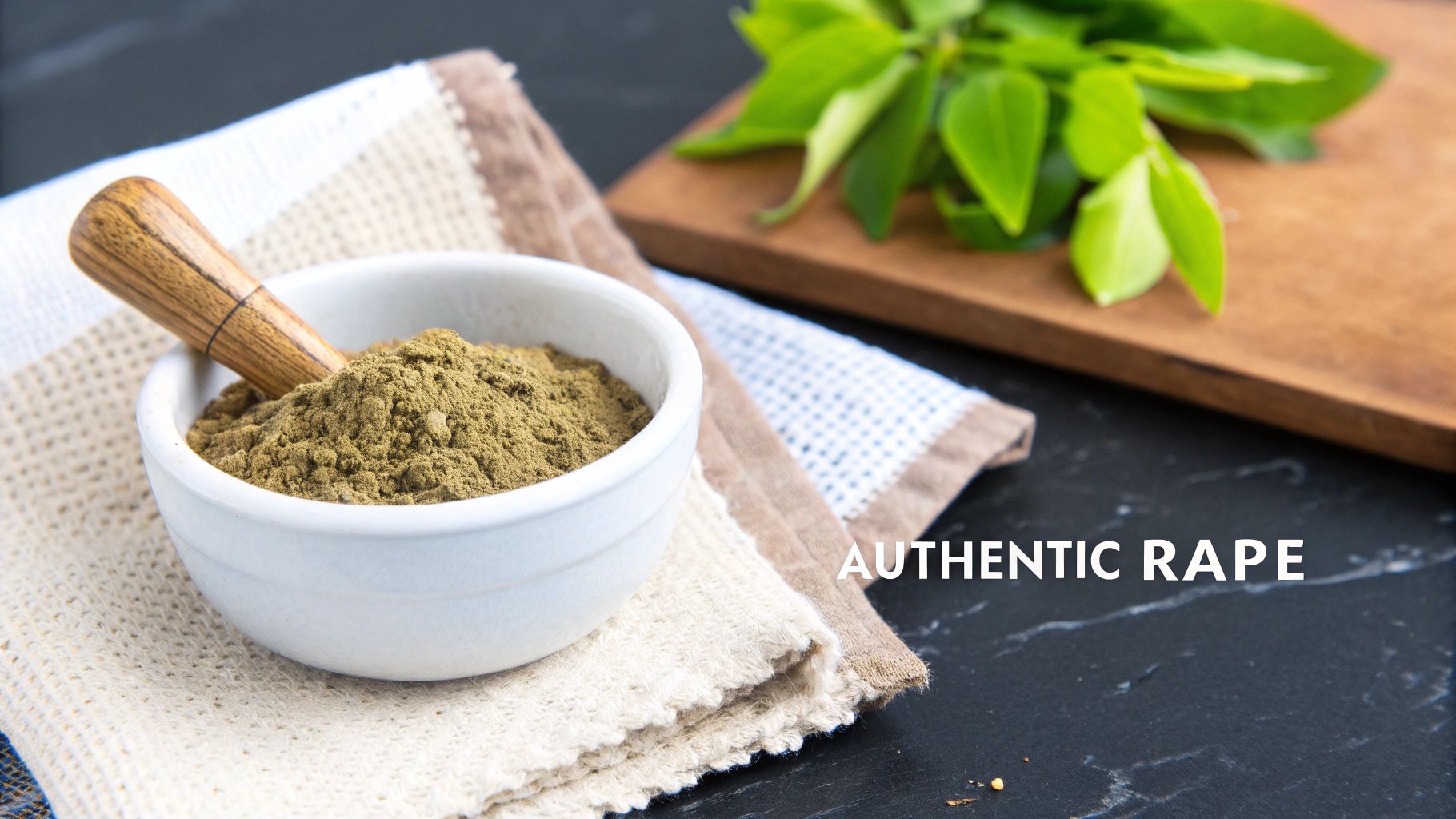
So, what separates the real deal from the imitations? Authentic Amazonian rapé is so much more than just an herbal powder. It’s a carefully crafted preparation with deep cultural and spiritual weight, designed to open specific energetic and mental states when used with respect and clear intention.
Think of it less like a product you buy and more like a spiritual key. Authentic rapé acts as a bridge to the ancient wisdom of the Amazon, created through a painstaking process passed down from one generation to the next. The ingredients, the preparation, and the very energy infused into it are what make it truly genuine.
The Sacred Ingredients
The heart and soul of almost every traditional rapé blend is Mapacho. It's a powerful, potent variety revered by Amazonian tribes as a master plant teacher. They see it as a sacred spirit, used for prayer, healing, and connection to the divine.
This finely powdered Mapacho is then blended with the ashes of other sacred plants or trees. You might hear names like tsunu, cumaru, or mulateiro—these are just a few of the botanicals used.
These ashes are absolutely critical to the blend:
- They help to activate and amplify the healing properties of the Mapacho.
- Each type of ash brings its own unique energetic signature to the mix.
- They are what give each rapé blend its specific character and purpose.
The synergy between the Mapacho and the specific plant ashes is what creates a rapé for deep grounding, another for heightened awareness, and so on.
To clarify the fundamentals, here’s a quick table breaking down what authentic rapé is compared to common misunderstandings.
Authentic Rapé at a Glance
| Characteristic | Authentic Amazonian Rapé | Common Misconception |
|---|---|---|
| Primary Ingredient | Finely ground Mapacho | Commercial plants or just any herbal powder |
| Purpose | Spiritual tool for cleansing, grounding, prayer | Recreational powder or a simple stimulant |
| Preparation | Ceremonially prepared by Indigenous artisans | Mass-produced in a lab or factory setting |
| Origin | Sourced directly from Amazonian tribes | Vague origins, often sold without provenance |
| Effect | Energetic and spiritual balancing | Purely physical or psychoactive "high" |
This distinction is crucial. When you engage with rapé, you are participating in a tradition, not just consuming a product.
The Importance of Provenance
You can't separate authentic rapé from its source. The knowledge of which plants to use, the precise preparation methods, and the sacred songs (icaros) sung during its creation are traditions held and protected by Indigenous communities. This is why sourcing directly from tribes in Peru and Brazil—as we do at AYNI RAPÉ—is the only way to guarantee you're receiving the real medicine.
Take the Acre region of Brazil, a central hub for authentic rapé. Here, the Kuntanawa tribe numbers only around 400 people. Their traditional blends are respectfully sourced for ceremonial use, helping people find deep clarity and grounding in a chaotic modern world. You can find more information about the tribes that produce this sacred powder on rapee.shop.
"Authentic rapé carries the spirit of the forest and the prayers of its makers. It is not something that can be replicated in a factory; it is born from a deep, reciprocal relationship with the land and ancestral knowledge."
This direct link ensures the rapé is not only potent but also ethically made, providing support for the cultural and economic well-being of the communities who are its rightful guardians. Choosing authentic rapé is a conscious act to honour this sacred lineage.
Tracing the Cultural and Botanical Roots of Rapé
To really get to the heart of authentic Amazonian rapé, we have to travel back in time, deep into the rainforest where this story began thousands of years ago. This sacred powder isn't some new-age trend; it’s an ancient spiritual technology, woven into the very fabric of Amazonian life. Its history is a living one, passed down through countless generations of tribal elders, healers, and spiritual leaders.
The use of psychoactive powder in South America has been documented for at least 4,000 years. For these communities, rapé was never just a substance. It was—and still is—a bridge to the spirit world, a tool for profound healing, and a vital part of their most sacred ceremonies. Each blend is infused with the prayers and wisdom of the people who make it, making it inseparable from its cultural home.
The Sacred Spirit of Mapacho
The botanical soul of nearly every authentic rapé blend is Mapacho (Nicotiana rustica). In Amazonian cosmology, Mapacho is considered a master plant teacher, a potent spirit that can cleanse, protect, and guide.
Mapacho is revered for its healing and purifying abilities. Indigenous traditions teach that the spirit of Mapacho is a wise and powerful ally. When used with respect and clear intention, it can sweep away heavy or negative energies, bring sharp focus to the mind, and open doors to deeper spiritual insight. This profound respect for the plant's spirit is the cornerstone of what makes Amazonian rapé authentic.
The preparation of rapé is a sacred act. The energy of the person making it, the prayers sung over the blend, and the intention held during the process are all believed to become part of the medicine's spiritual essence.
This is exactly why its preparation is often a closely guarded ritual, only performed by those with the right training and spiritual authority. The process itself infuses the blend with the very power and protection it’s meant to provide.
The Ancestral Lineage of Rapé-Making Tribes
The story of rapé is best told through the diverse traditions of the many tribes who are its custodians. Each community has nurtured its own unique relationship with the medicine, creating a rich tapestry of distinct blends, application rituals, and ceremonial uses.
Among the most well-known guardians of this sacred knowledge are tribes like the Huni Kuin (also known as Kaxinawá), the Yawanawá, and the Kuntanawa.
- The Huni Kuin often create strong, grounding blends designed for deep cleansing and spiritual protection. Their rapés are known for a potent and direct energy.
- The Yawanawá are celebrated for their more uplifting and heart-opening blends. You can learn more about the unique characteristics of Yawanawá rapé and its cultural significance in our detailed guide.
- The Kuntanawa focus on blends that connect the user with the healing spirits of the forest, often incorporating a wider variety of sacred plants and ashes.
These communities, and many others, have kept their ancestral wisdom alive despite enormous external pressures. In Peru and Brazil, tribes like the Kaxinawá, who live along the Purus and Curanja rivers, continue to produce their traditional blends for spiritual cleansing. The state of Acre in Brazil is a vital hub for high-quality rapé, with producers from the Huni Kuin, Yawanawá, Nukini, Katukina, and many other tribes crafting the world's most respected blends.
When it comes down to it, the cultural roots of rapé are what give it true power. Every pinch of authentic Amazonian rapé is a direct connection to this ancient lineage—a testament to the resilience of its people and the timeless wisdom of the rainforest.
How to Identify Authentic Rapé and Avoid Fakes
As the world of sacred powder grows, navigating it requires a bit of a discerning eye. It’s no surprise that with its rising popularity, the risk of stumbling upon low-quality or completely inauthentic products is also on the rise. Think of this as your practical guide to telling the real deal from the imitations, ensuring your support goes towards a powerful and ethically made medicine.
Truly authentic Amazonian rapé isn't just some powder in a bottle; it's a finely crafted preparation that should engage all your senses. Unlike something churned out in a factory, it has specific traits that act as clues to its purity and traditional roots. Learning to spot these signs is the first step in building a practice that’s both respectful and intentional.
Key Sensory Indicators of Authenticity
When it comes to identifying genuine rapé, your own senses are your best allies. An authentic blend has a particular feel, smell, and look that all point back to its natural ingredients and the meticulous, hands-on way it was prepared by tribal artisans.
Here are the main sensory clues you should be looking for:
- Aroma: Authentic rapé has a rich, earthy, and complex smell. You should be able to pick out the distinct notes of Mapacho and the smoky fragrance from the plant ashes. It needs to smell natural and alive—not musty, chemical, or artificially scented.
- Texture: This is possibly the most critical indicator. Real rapé is ground into an incredibly fine, almost dust-like powder. If you rub a tiny bit between your fingers, it should feel silky smooth, with absolutely no grittiness or coarse particles.
- Colour: The shade of authentic rapé can vary quite a bit, depending on the specific mix of Mapacho and ashes used. It usually falls somewhere in a range from a light grey or beige to a deep, reddish-brown. Be cautious of any powders that look unnaturally bright or have synthetic-looking colours.
This chart can help you visualise how different herbal blends originate, reinforcing why it’s so important to know where your rapé comes from.
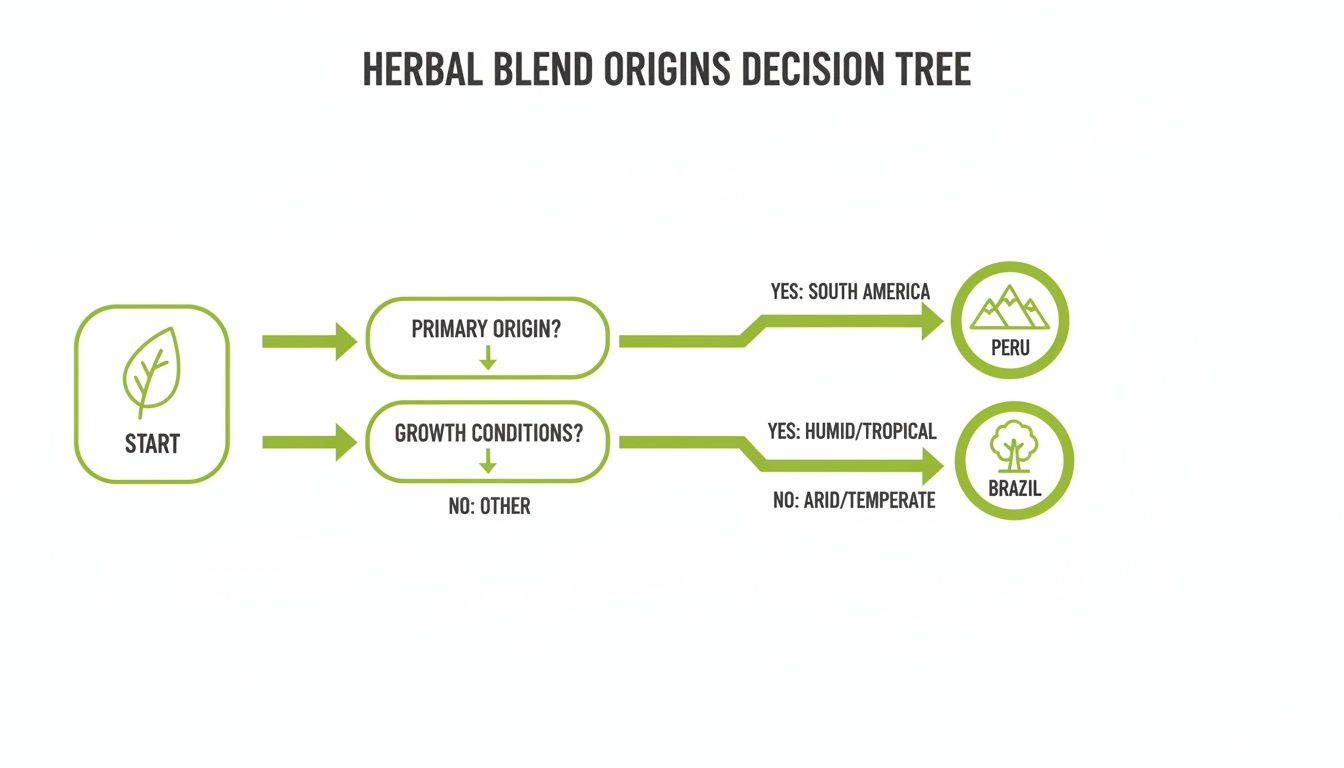
As the decision tree shows, the unique environmental factors in places like Peru and Brazil create very different botanical profiles, which makes provenance a huge part of a blend’s character.
Knowing the Origin Is Non-Negotiable
Beyond checking with your senses, the single most important factor in verifying authenticity is knowing where the rapé came from. An ethical supplier will always be transparent about which tribe crafted the blend and the region it was sourced from. This provenance is your guarantee that you are receiving a medicine made with ancestral knowledge and sacred intention.
When you're looking at a supplier, check for a direct connection to Indigenous communities. Vague descriptions like "Amazonian powder" are a major red flag. Reputable sources, like us here at AYNI RAPÉ, are proud to name the tribes we partner with—such as the Yawanawá, Kuntanawa, or Huni Kuin. For instance, learning about the specific traditions of the Yawanawá people can give you a much deeper appreciation for their unique rapé blends. You can explore our authentic Yawanawá rapé and connect directly with their lineage.
"Authenticity is not just about ingredients; it's about lineage. A genuine rapé carries the story, prayers, and energetic imprint of the tribe that created it. Without that connection, it's just a powder."
This direct link doesn't just ensure the blend is potent; it confirms that it's part of a reciprocal relationship that supports the cultural and economic well-being of its guardians.
A Quick Checklist for Verification
To help you make an informed choice, here’s a quick side-by-side comparison that sums up what to look for and what to avoid.
The table below is a straightforward guide to help you verify the quality and authenticity of rapé products. Becoming a discerning user means you can confidently invest in something that truly honours the sacred tradition behind it.
| Quality Indicator | Signs of Authentic Rapé | Red Flags of Inauthentic Rapé |
|---|---|---|
| Sourcing Transparency | Clearly names the specific tribe and region of origin. | Vague or non-existent information about its source. |
| Texture & Fineness | Extremely fine, silky, dust-like powder. | Coarse, gritty, or inconsistent texture with lumps. |
| Aroma Profile | Earthy, smoky, and natural scent of plants and ash. | Musty, chemical, or artificially perfumed smell. |
| Ingredient List | Lists Mapacho (Nicotiana rustica) and specific plant ashes. | Undisclosed "herbal fillers." |
| Supplier Relationship | Emphasises ethical partnerships and direct trade. | Focuses solely on price and psychoactive effects. |
Using this checklist can give you peace of mind, knowing you are choosing a product that is not only effective but also made with integrity.
Why Ethical Sourcing and Provenance Matter
Choosing authentic Amazonian rapé is about so much more than just what’s in the blend. It’s about understanding the very soul of the medicine, which is completely tied to where it comes from and how it gets to you. The provenance of your rapé isn't just a detail on a label; it’s a story of connection, respect, and responsibility. That story directly shapes its energetic integrity.
When you work with this sacred powder, you're not just using a product. You're stepping into an ancient relationship between people and plants, one governed by principles that keep the medicine potent and pure. Ignoring these principles breaks a sacred chain, leaving you with something that might look right but lacks the spiritual essence that makes rapé what it is.
The Sacred Principle of Ayni
At the very heart of ethical sourcing is the Quechua concept of Ayni, which can be understood as sacred reciprocity. Ayni isn't a simple transaction. It’s a deep-seated worldview that sees all life as interconnected, teaching that for everything we take, we must give something back. This creates a balanced, harmonious flow of energy.
This principle guides the entire journey of authentic Amazonian rapé. The tribes who prepare it live in Ayni with the forest, taking only what they need and always offering prayers and gratitude in return. When you get your rapé from a supplier who honours this, like AYNI RAPÉ, you become part of that reciprocal exchange. Your purchase is more than just a sale; it’s an offering that flows right back to the source.
Ayni is the thread that weaves together the user, the supplier, and the tribe. It ensures that the spirit of the medicine is honoured at every step, transforming a simple purchase into a meaningful act of energetic exchange and support.
This means your choice directly contributes to a cycle of mutual respect and sustenance, honouring both the medicine and its guardians.
Why Direct Tribal Sourcing Is an Act of Solidarity
Buying rapé sourced directly from Indigenous communities is about far more than just getting a better product. It’s a powerful act of solidarity—a lifeline for the cultures that have safeguarded this ancestral wisdom for millennia. These communities are on the front line, facing immense pressure from deforestation, land theft, and economic hardship.
Ethical sourcing directly empowers these tribes in a few crucial ways:
- Cultural Preservation: It creates a viable economic path that allows elders to keep passing down their traditions, language, and sacred plant knowledge to the next generation.
- Economic Stability: It provides a sustainable income, helping families meet their needs without having to turn to destructive industries like logging or mining.
- Protection of Ancestral Lands: By making the standing forest economically valuable, it gives tribes the resources to protect their territories from illegal exploitation.
When you consciously choose ethically sourced rapé, your purchase becomes a vote for the preservation of the Amazon rainforest and its vibrant cultures. You’re not just a consumer; you become an ally, actively helping to protect this sacred heritage. This choice honours the spirit and the people behind the medicine, helping ensure it will be here for generations to come.
A Practical Guide to Using Rapé with Intention
When you sit with authentic Amazonian rapé, you’re not just using a substance; you’re engaging in a sacred practice. Approaching it with reverence is key to unlocking its power for grounding and clarity. This isn't something to be done casually. It’s a mindful ceremony, even when you're alone.
Treating each step with focused awareness transforms the act of taking rapé into a meaningful ritual. It becomes a moment of deep self-connection and energetic cleansing.
This guide offers a simple framework for working with rapé safely and respectfully. From preparing your space to integrating the experience afterwards, each step is designed to honour the spirit of the medicine and help you build a relationship with this ancient tool.
Preparing Your Tools and Sacred Space
First things first, gather your tools and set the stage. You’ll need an applicator, which is either a Kuripe for self-application or a Tepi for sharing with another person.
- The Kuripe is a V-shaped pipe that lets you serve yourself. One end goes in your mouth, the other in your nostril, so you can gently blow the powder into your own nasal passage.
- The Tepi is a longer pipe used when one person serves another. This creates a shared energetic connection between the giver and the receiver.
Once you have your applicator, create a space that feels right. It doesn't need to be elaborate. Just find a quiet, clean spot where you won’t be disturbed. You might light a candle, burn some Palo Santo, or simply find a comfortable cushion on the floor. The aim is to signal to yourself that you're shifting from ordinary time into a moment of focused intention.
Setting a Clear Intention
This is perhaps the most important part of the entire process. Before you even touch the rapé, ask yourself: Why am I here? What are you hoping to release, understand, or invite into your life? Your intention is the compass that guides the entire experience.
It could be as simple as, “I wish to clear my mind and let go of the day’s stress.” Or it could be deeper, like, “I ask for clarity on a decision I’m struggling with.”
Take a moment. Close your eyes, breathe deeply, and feel into your intention. You can whisper it aloud or hold it silently in your heart. This simple act focuses your mind and invites the spirit of the rapé to work with you towards your goal.
This dedication elevates the practice from a purely physical action to a sacred prayer. It lays the energetic groundwork for everything that follows. For more on this, you can read our article about the sacred nature of rapé.
The Ceremonial Process Step-by-Step
With your space ready and your intention set, you can begin. A word of advice: always start small. A tiny, pea-sized amount split between both nostrils is more than enough to start with. This allows you to get a feel for a new blend and how your own energy responds to it.
Here’s a simple process for using a Kuripe:
- Load the Kuripe: Scoop a small amount of rapé into the nostril end of your pipe. A gentle tap helps the powder settle.
- Take a Deep Breath: Inhale fully and hold it. This is important as it prevents you from accidentally breathing the powder down into your lungs.
- Position the Kuripe: Place the mouth end firmly between your lips. Bring the other end to your left nostril—traditionally, we start on the left side to symbolise letting go.
- Administer with a Gentle Blow: Use a short, sharp puff of air from your diaphragm, not a long, slow breath. Think of it as a quick, firm whoosh.
- Breathe and Centre: Remove the Kuripe and take a moment. Keep your head tilted slightly forward to stop any drip down your throat. Just feel.
- Repeat on the Other Side: Load the applicator again with a similar amount. Repeat the process for your right nostril, the side traditionally associated with receiving clarity and blessings.
- Sit in Stillness: Now, the real work begins. Close your eyes and simply be with the medicine. Focus on your breath and allow whatever comes up—sensations, emotions, thoughts—to move through you without judgement.
Aftercare: Grounding and Integration
The ceremony isn't over once you’ve put the Kuripe down. The moments that follow are crucial for integrating the experience and grounding yourself. Jumping straight back into your day can disrupt the subtle energetic shifts that have just taken place.
Here are a few simple ways to close your practice:
- Remain Seated: Stay in quiet meditation for at least 5–15 minutes. Let your breathing be your anchor as you observe your inner world.
- Ground Your Energy: If you feel a bit dizzy or spacey, press your feet firmly into the floor. Placing your hands on the earth or sipping a glass of water also helps you come back into your body.
- Journal or Reflect: Spend a few minutes writing down any insights, feelings, or ideas that surfaced. This helps you make sense of the experience and carry its lessons forward.
Proper aftercare ensures you receive the full benefits of your ceremony, allowing the clarity and peace you've cultivated to ripple out into your daily life.
Understanding Safety and Legal Considerations
Working with authentic Amazonian rapé is a profound experience, and it's one that calls for a healthy dose of respect. This isn’t a light undertaking. While the cleansing can be incredible, the immediate physical and emotional sensations can be quite intense, and it's crucial to know what you might expect.
It’s perfectly normal during a rapé ceremony to feel a bit dizzy, have a sudden spike in awareness, or even feel nauseous. Think of these not as side effects, but as signs the medicine is getting to work, clearing out old, stagnant energy. Many people also find themselves crying, which is just another part of this powerful purification.
This sacred powder is a respected tool, not something to be taken lightly. That means if you have certain health conditions, you need to be particularly cautious. Anyone with a serious heart condition, severe hypertension, or glaucoma should think twice or avoid it completely. The initial rush can affect blood pressure and circulation, so it’s not worth the risk.
Navigating the Legal Landscape
The legal side of things can seem a bit murky, but in Ireland and most of Europe, it's actually quite clear. Rapé is typically legal for personal and ceremonial use. The reason is simple: its main ingredient is Mapacho, a potent form of plant, which isn't a controlled substance.
That said, regulations can vary slightly from one country to the next. It’s always your responsibility to double-check the specific laws where you live. While we offer it as an incense or aromatic powder, knowing the local rules means you can practice with peace of mind.
The legal standing of rapé in Europe generally reflects its traditional use as a sacred incense and ceremonial tool rather than a recreational product. This context is vital for its continued availability and respectful use within the community.
Your Personal Responsibility in Practice
At the end of the day, building a safe and meaningful relationship with rapé boils down to your own personal responsibility. It’s about listening to your body and starting with a very small amount to see how you feel. Never let anyone pressure you into taking more than you're comfortable with.
It's also about setting the right scene – a safe, intentional space where you can fully be with the experience. By understanding the physical effects and the legal side of things, you empower yourself. You can work with this sacred Amazonian medicine in a way that is safe, respectful, and truly honours its ancient roots. This careful approach is what makes the journey one of clarity and grounding, not one of carelessness.
A Few Common Questions About Amazonian Rapé
When you first start exploring the world of sacred powder, it's natural to have a few practical questions. Let's walk through some of the most common ones to help you build your confidence and approach this practice with respect and understanding.
How Should I Store My Rapé to Keep it Fresh?
Think of your rapé like a fine herbal tea or spice. To keep its potency and beautiful aroma intact, you'll want to store it in an airtight container, well away from direct sunlight, moisture, and big temperature swings. A small glass jar or a well-sealed pouch tucked away in a cool, dark cupboard is perfect.
Getting the storage right is key. It stops the fine powder from clumping up due to humidity, but more importantly, it helps preserve the subtle energetic qualities that the makers infused into it. This way, every time you use it, you're getting the experience just as it was intended.
What's the Real Difference Between Blends from Different Tribes?
Every single tribe has its own ancestral traditions, its own unique prayers, and a profound, living knowledge of the plants they work with. This is why their rapé blends are so distinct from one another. The differences come down to the specific combination of plants, the types of bark, the sacred ashes used, and the specific intention channelled into the blend during its ceremonial creation.
For example, you might find that a blend from the Kuntanawa people feels incredibly strong and grounding, connecting you deeply to the earth. In contrast, a Yawanawá blend might feel much more uplifting and expansive, opening up your spiritual awareness. Trying different blends is a beautiful way to connect with the unique spirit of each of these ancient lineages.
It’s important to remember that the energy of a blend is a direct reflection of its lineage. The plants, the land, and the prayers of the people who made it are all part of what you experience.
Can I Use Rapé by Myself, or Do I Need a Facilitator?
You can certainly self-administer rapé using a V-shaped applicator pipe called a Kuripe. However, if you are just starting out, I’d strongly recommend having your first experience with a trained and trusted facilitator. They know how to hold a safe and supportive space, can guide you through the process, and help you make sense of the powerful energetic shifts that can sometimes arise.
Once you become more familiar with the medicine and begin to understand your own personal relationship with it, self-practice can become a powerful and deeply personal tool for finding clarity, grounding yourself, and connecting inward.
At AYNI RAPÉ, our entire focus is on providing ethically sourced, truly authentic rapé that comes directly from the Amazon's most respected tribes. We invite you to explore our carefully chosen selection of sacred blends and handcrafted ceremonial tools to support your journey. Visit aynirape.com to connect with these ancient traditions.


